





























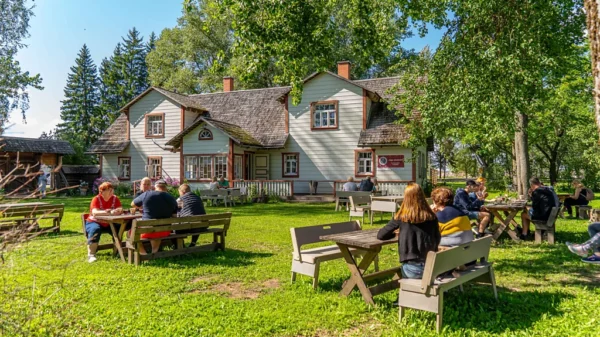
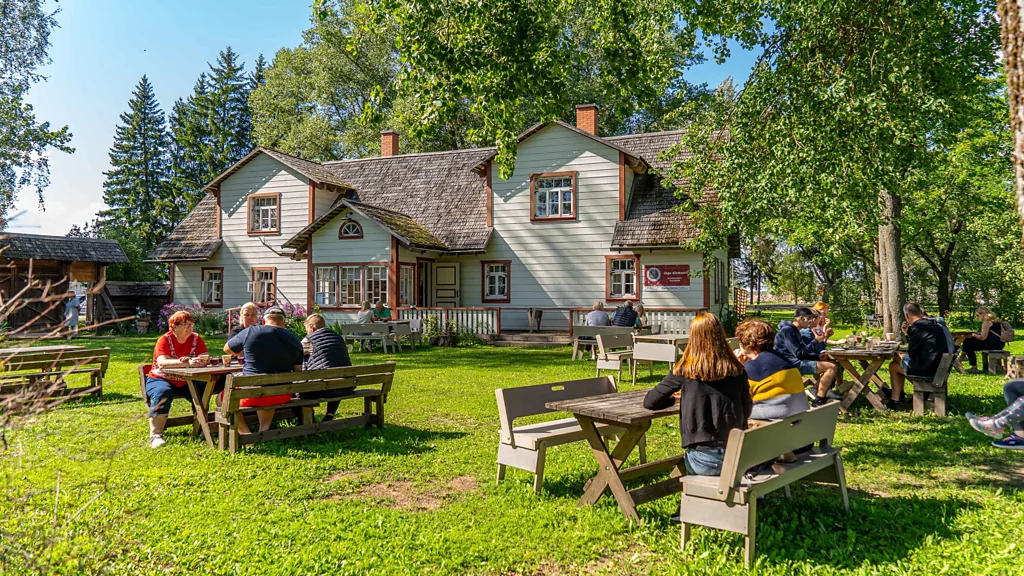
Each summer, home gardens, garages and even bedroom windows across Estonia become temporary cafes open to anyone.
Beneath a giant tent, complete strangers queue to buy lunch. Around them, vegetable beds overflow with cucumbers, strawberries, garlic and courgettes, while an apple tree shades a table laden with rye bread, homemade pickles and a simmering pot of seljanka, a tomato-based soup with ham and smoked sausage. Guests order from a simple printed menu before carrying bowls of steaming soup to communal tables to eat.
At first glance, it looks like a country cafe. It isn’t. It’s Heiki Kalvik’s back garden in the outskirts of Kehra, a small town about 45 minutes east of Tallinn, which he turns into a pop-up cafe each summer.
“I’m very outgoing, and I like to cook. I enjoy hosting, and I’m proud of our outdoor space,” Kalvik says as another group of visitors arrives.
Kalvik is one of around a dozen residents taking part in Kehra’s annual Kodukohvikute Päev, or “home cafe day”, when locals turn private gardens, courtyards and garages into temporary eateries for one day in July. Elsewhere in town, Karolin Vahtre has converted a garage behind her Soviet-era apartment block into a makeshift cafe, selling tempura sushi rolls, chanterelle quiche, chocolate cake and French fries to anyone who stops by.
More than 150 such events are held across Estonia between April and September, a beloved tradition that has spread steadily since the first event almost two decades ago. Some are elaborate, with rented tents, tables and chairs; others are little more than a lemonade stand manned by children. Together, they give visitors a rare glimpse of everyday Estonian life that is usually out of reach.
How Estonia’s cafe days began
Estonia’s home cafe tradition began on Hiiumaa, the country’s second-largest island, in 2007 when local tourism promoters were looking for a way to attract visitors beyond the peak month of July.
They drew inspiration from Kärdla, the island’s capital, and its long association with coffee. In the mid-1800s, the town was home to a broadcloth factory run by a Baltic German baron, who employed coffee-drinking workers from Central Europe. Local Estonians soon adopted the habit, with Kärdla residents eventually earning the nickname kohvilähkrid, or “coffee flasks”, for taking coffee into the fields instead of the traditional sour milk or beer.
Fifteen homes took part in Hiiumaa’s 2007 cafe days; today, the three-day event in early August attracts thousands of visitors, with dozens of temporary cafes selling homemade food and drinks across the island.

Hiiumaa Museum is one of the few participants to have taken part every year since 2007, re-creating a 19th-Century cafe in its conference rooms at the Long House, the museum’s main building and the former home of the broadcloth factory’s managers. Its director, Kauri Kiivramees, says the tradition taps into something deeper than food and drink: the islanders’ long history of welcoming outsiders.
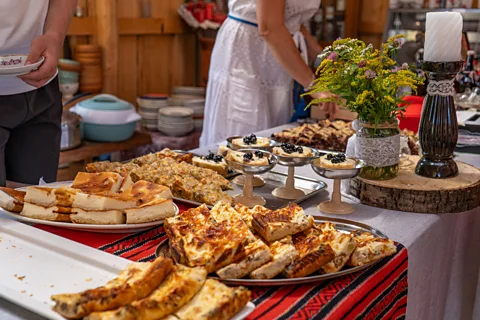
Kiivramees says even this so-called “island of introverts” has always understood the importance of community: “It’s quite traditional to help foreign visitors on Hiiumaa because back then it meant they were here because of [a] shipwreck or something like that, and they needed help.”
From island tradition to national phenomenon
Small, rural communities have historically been the backbone of Estonian society on both the country’s islands and mainland. While people aren’t as reliant on their neighbours as they once were, certain traditions, like the talgud, have endured. These communal work days once involved haymaking or barn raising; today they are more commonly used for community clean-ups. Home cafe days reflect that same spirit of neighbourliness, and after their initial success on Hiiumaa, they soon spread across the country.
Setomaa in south-eastern Estonia, holds its pop-up cafe days every year on the second weekend in August, using the event to showcase its distinctive culture.
“One of the reasons why we started [Kostipäiv] is because we saw that during the summertime we don’t have so many events where people are wearing traditional clothes or offering traditional food like sõir, our homemade cheese,” said Liis Kogerman, board member of the organising NGO Seto Küük.
The event has become one of the region’s calling cards, with some cafes attracting as many as 1,000 visitors. While one has since become a permanent restaurant, most participants simply enjoy selling homemade food to visitors without the pressures of running a business.
The same spirit can be found in the university city of Tartu, where Inga Kulmoja runs a one-day pop-up cafe to indulge her passion for homemade ice cream. Kulmoja lives in an old wooden house with no yard, so each year she lowers ice cream down to the street from her third-storey bedroom window.
“It’s very low tech,” she said, noting that running the cafe is quite different from her daily work as an entrepreneur in the AI space. “Only cash, and the signs are written on reused paper. We bought some rope, and we have two buckets: one for the ice cream, and the second smaller bucket is for cash. I’m not even using an ice cream machine; I’m just making them in the freezer.”
Even though Kulmoja is mostly busy dipping ice cream and filling the buckets, she still likes to see visitors queued up, especially when the same people come year after year. “I think people have some kind of willingness to show what they can offer or how they live,” she said. “In Estonian, you would say maybe x xedevus’. It’s like the feeling you get being the centre of others’ attention.”
When strangers become neighbours
Oleg Pun and Iryna Topilina moved to Estonia from Ukraine in 2019, but didn’t host their first cafe until 2022, when Pun’s parents moved to Estonia to escape from the war. Pun and Topilina encouraged them to participate in their new village’s cafe days to learn more about the community.
“They were so surprised and moved by how many Estonians came to support them. Neighbours from nearby houses even brought over extra chairs and furniture when they saw we needed more seating,” recalled Topilina.
Now the family works together to run a cafe during Kalamaja Days in Pun and Topilina’s garden. This year they served cabbage varenyky, Ukrainian dumplings made from a family recipe that goes back almost 100 years, and green borscht made with locally foraged sorrel and nettle and cooked over an open fire.
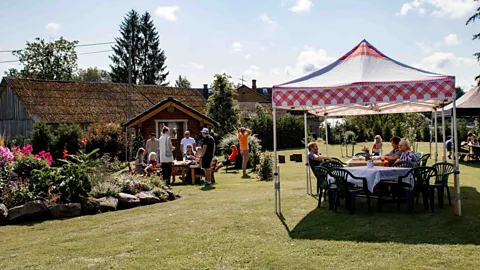
While Estonia’s home cafe days may feel like secret celebrations to outsiders, they are one of the few occasions when visitors are invited to wander through private gardens, taste family recipes and glimpse everyday life inside local communities.
As Kalamaja Days organiser Katrin Aedma said, “It is not so often you can see inside of our yards. They are closed. But this is the day when our people open their hearts and their gates.”
Sourse: BBC


