



























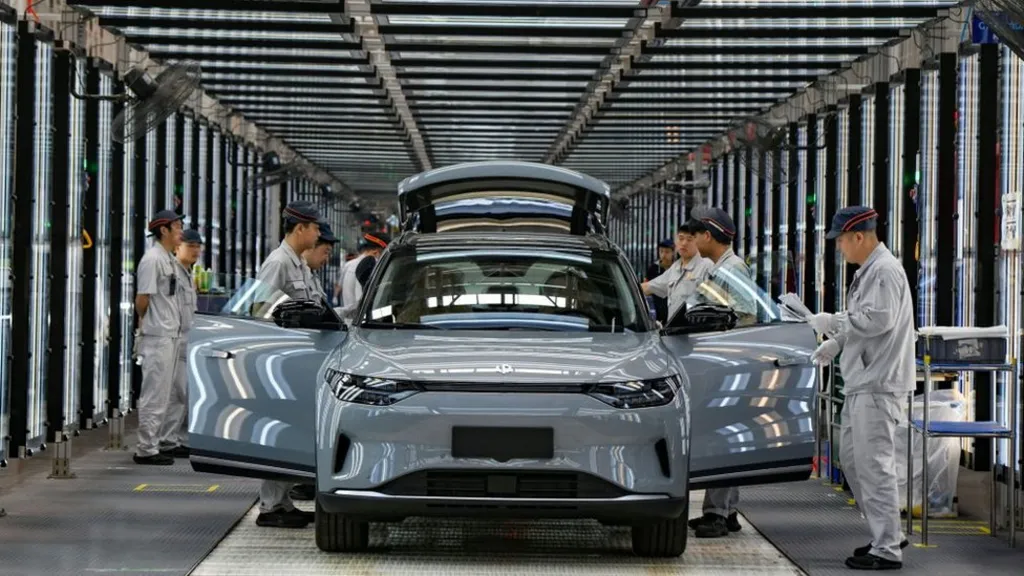
US President Joe Biden is ramping up tariffs on Chinese-made electric cars, solar panels, steel and other goods.
The White House said the measures, which include a 100% border tax on electric cars from China, were a response to unfair policies and intended to protect US jobs.
China said it was opposed to the hikes and would take retaliatory measures.
Analysts said the tariffs were largely symbolic and intended to shore up votes in a tough election year.
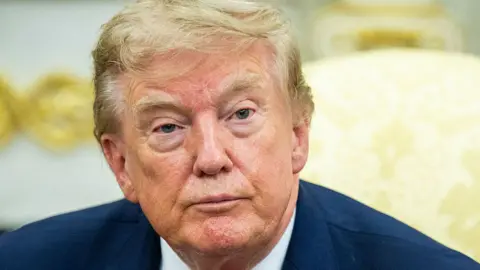
They follow months of criticism by former President Donald Trump, who is running for the White House against Mr Biden and has argued his rival’s support for electric cars would “kill” the US car industry.
Mr Biden on Tuesday vowed that he would not let China “unfairly control the market” for electric vehicles and other key goods, including batteries, computer chips and basic medical supplies.
“If the pandemic taught us anything – we need to have a secure supply of essentials here at home,” he said.
The tariffs announced on Tuesday will hit an estimated $18bn worth of imports, the White House said.
As well as a rise from 25% to 100% on electric vehicle tariffs, levies on solar cells will increase from 25% to 50%.

Tariff rates on certain steel and aluminium products will more than triple to 25%, up from 7.5% or less.
In response, China’s commerce ministry said the new moves would “severely affect the atmosphere for bilateral cooperation”, and criticised what it characterised as the politicisation of economic issues.
Ahead of the heavily-trailed White House announcement on Tuesday, a spokesperson for China’s foreign ministry said it “will take all necessary measures to safeguard its legitimate rights and interests”.
US says falling trade with China could be positive
How Chinese firms are using Mexico as a backdoor to the US
The moves expand sweeping border taxes that the US imposed on Chinese goods under Mr Trump, citing unfair trade practices.
During the Biden administration’s review of the measures, the government received nearly 1,500 comments, the vast majority of them from business owners arguing that they were driving up prices for everyday Americans, and asking them to be removed.
Mr Biden’s decision to leave the tariffs in place and expand them into new areas – even as persistent US inflation has weighed on his approval ratings – is a testament to the dramatic shift in trade views for both political parties in the US, which had long championed the benefits of global commerce.
Wendy Cutler, a former trade official for the US who is now vice-president of the Asia Society Policy Institute, said she believed Americans were willing to accept higher priced cars, in exchange for helping to protect US companies and jobs.
“We’ve seen this movie before – with solar, with steel and [aluminium], and when it comes to cars and other products the United States needs to get ahead of the curve,” she said.
“It’s all about trade-offs and maybe in the immediate term cars become more expensive but in the longer term we want to have a competitive industry here.”
In a briefing with reporters, White House officials denied that domestic politics had influenced the decision.
They said Beijing had shown no sign of moving away from practices that harm the US, including rules that force western companies to share information with the aim of stealing it and subsidies that have put firms in a position to pump out products well beyond expected demand.
“They’re flooding the market,” Mr Biden said. “It’s not competing – it’s cheating.”
The White House said the tariffs were targeted and it did not expect them to stoke inflation, contrasting their approach with that of Mr Trump.
The former president, who once called himself a “tariff man”, has campaigned on a proposed across-the-board 10% tariff on foreign imports, which could jump to 60% for goods from China.
He has also attacked Mr Biden for promoting electric vehicles, a move he has argued will destroy US car companies, key employers in states such as Michigan that will be key election battlegrounds in November.
Erica York, senior economist at the Tax Foundation, said both candidates were “heading down the same path” of higher barriers to trade and looking inward “rather than looking at what we can do on the policy front that would actually make our sectors more competitive”.
She said the administration’s promotion of the tariffs as strategic was a “euphemism for protection for sectors that are politically important for this administration”.
“It comes down to a political economy calculus rather than what makes the most economic sense or what’s most affordable for US consumers.”
The US already imposes steep tariffs on electric vehicles made in China, which has made sales of such cars negligible.
But Washington has been watching warily as sales by Chinese companies in Europe and other countries increase.
White House officials said ensuring that green technologies were not dominated by a single country was critical to making the transition successful and sustainable in the long run.
While moves targeting electric vehicles are likely to have minimal practical effect, the business world is waiting to see if Europe will take similar steps, said Natasha Ebtehadj of Artemis Investment Management.
The European Union and the UK are among the other places debating moves to curb imports of Chinese-made electric cars, even at the risk of slowing their adoption.
“It’s not really a surprise to investors or to Chinese companies, especially in the run-up to an election where both candidates are not really pro-China,” she said.
“Given the relatively small volume of imports to the US, it’s maybe more interesting what happens next in Europe.”
The US and China have been locked in a trade war since 2018, when Mr Trump imposed tariffs on some two thirds of goods imported from China, at the time worth an estimated $360bn.
The measures prompted retaliation by Beijing, a stand-off that ended in a détente in early 2020 when Mr Trump reduced the rate of some tariffs, while China pledged to boost its purchases from the US.
Those promises have fallen short, but the tariffs have since yielded more than $200bn according to the US in new border taxes for the US government, while prompting a major reshuffling of global trade patterns.
Much of that sum has been paid by everyday Americans in the form of higher prices for furniture, footwear and other goods.
However, in a research note, Oxford Economics described the latest plans as “more symbolic bark than bite”.
The firm said they were likely to lift inflation by a negligible 0.01 percentage points, while weighing on growth in a similar way, calling the effect a “rounding error”.
Sourse: BBC


