































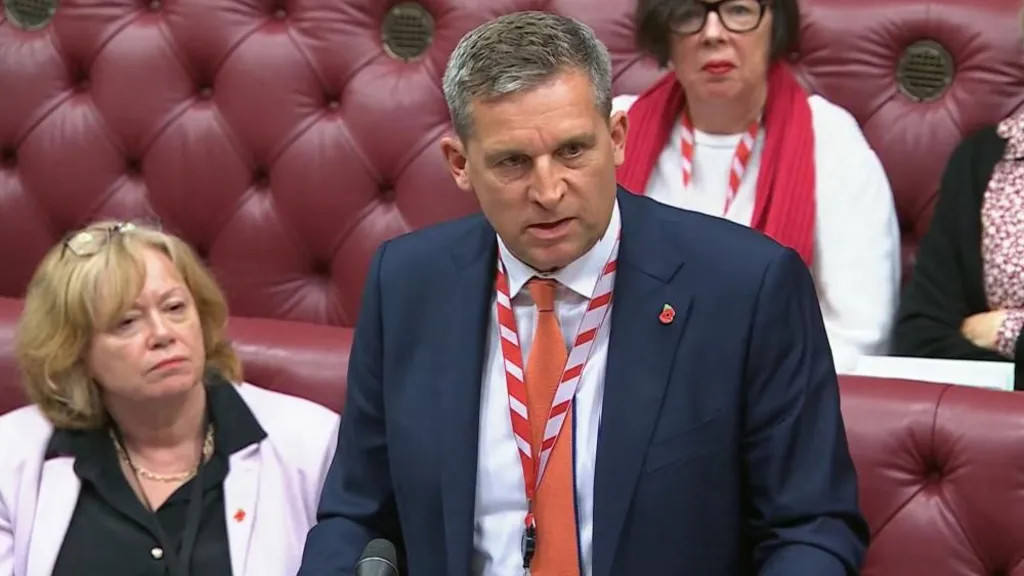
The prisons minister has resigned from the government, the BBC has been told.
Lord James Timpson was appointed to the role in July 2024 after leaving his job as CEO of the Timpson group, a business which provides key cutting and shoe repair services and employs hundreds of former prisoners.
His arrival in government was greeted with much fanfare by some in the Labour Party and described as “radical” and “innovative”.
But in a departing statement on Monday, seen exclusively by the BBC, Lord Timpson said he was stepping down and it was an “honour” to serve in the post.
His statement did not give a specific reason for resigning, but it is understood he feels he has done as much as he can in the role.
Prisons in England and Wales were at crisis point, reaching almost full capacity, when he first entered Sir Keir Starmer’s government.
He oversaw the controversial early release scheme which saw tens of thousands of inmates let out to create more space in jails.
His critics will argue prisons continue to be violent, drug infused and overcrowded, while probation officers still report being overworked and unable to cope.
But figures do show assaults against staff and self-harm in prisons are falling.

Lord Timpson said in his resignation statement that he had left “our prisons and probation service in a much healthier and happier state than two years ago”.
He added: “I’m proud to have become the longest-serving minister in this role for 15 years. I’m also proud that 75% of prisons and 90% of probation teams are now performing better than when I started.
“Self-harm, violence and assaults on staff are all down, and fewer people are leaving prison without a home to go to, a measure of dignity I care about deeply.”
He also pointed to the Women’s Justice Board he established, saying he “believe[s] most women should not be in prison at all” and “diverting them away from custody, helping them with often chaotic, damaged, and addicted lives, is one of the changes I’m proud to have achieved”.
His critics may question why he is leaving before the Sentencing Act 2026 is enacted in September, when more people are expected to be released early and further criminals will serve their sentences in the community.
Source: BBC


