














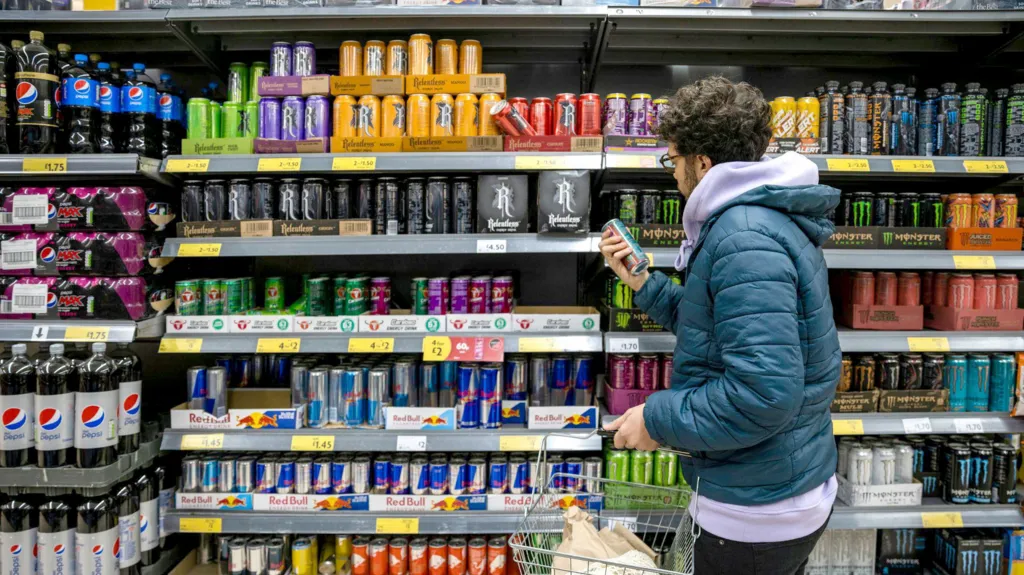
The government is planning a new law in England to stop anyone under the age of 16 buying energy drinks such as Red Bull, Monster and Prime from shops, restaurants, cafes, vending machines and online.
Up to a third of UK children are thought to consume these types of drinks every week, despite most supermarkets having already introduced a voluntary ban.
Some popular drinks contain more caffeine than two cups of coffee. Excessive consumption is linked to headaches and sleep problems.
Health and Social Care Secretary Wes Streeting told the BBC Radio 4’s Today programme the government had “been called upon” to act by parents, teachers and children.
“You can see the impact on the health, concentration and the learning, and that is why we are acting,” he told BBC Breakfast.
Too much caffeine can cause a rapid heart rate, abnormal heart rhythms and seizures.
Although rare, there have been some deaths linked to excess caffeine.
The sugary versions of the drinks can also cause damage to teeth and contribute to obesity, according to The Association of UK Dieticians.
A consultation will now run for 12 weeks to gather evidence from health and education experts as well as the public and retailers and manufacturers who already ban the drinks.

While no official date has been set for the ban, Streeting said it will come in “a lot sooner” than the end of this parliament – the deadline Labour had previously promised.
Carrera, 18, is part of a youth activist group called Bite Back. She told Today that manufacturers are “clever” by working with influencers, using fun packaging and creating enticing flavours aimed at young people.
“It’s no wonder energy drinks have become the social currency of the playground,” she added.
Responding on the programme, Streeting said the government needs to “change with the times” and tackle social media advertising.
Lower-caffeine soft drinks, such Diet Coke, are not affected by the ban, and neither are tea and coffee.
TV chef Jamie Oliver has repeatedly warned of the dangers and disruption energy drinks can cause, with kids coming into school “bouncing off the walls” having had energy drinks for breakfast.
“We are talking about three, four shots of espresso in one of these things. Loads of sugar. So an absolute nightmare,” he said in a video posted on X last year.
Under current labelling rules, any drink, other than tea or coffee, with over 150mg of caffeine per litre requires a warning label saying: “High caffeine content. Not recommended for children or pregnant or breast-feeding women.”
Young people have smaller bodies and their brains are still developing, which can make them more sensitive to caffeine, say experts.
For most adults, up to 400mg of caffeine a day, or about four cups of instant coffee or five cups of tea, is safe.
The previous Conservative government had planned to introduced the ban, but scrapped the move in 2022, and said consumption should be a personal choice.
Streeting told BBC Breakfast the Tories “called it wrong” and while personal responsibility applies for adults, children need a different approach.
He explained that from his office he sees kids leaving school popping into the shop and buying drinks on their breaks and on the way home, with nobody to stop them.
Prof Steve Turner, president of the Royal College of Paediatrics and Child Health, said a ban was the “next logical step” in making children’s diets more healthy.
And Prof Amelia Lake from Teesside University, who has studied the drinks’ impact on young people’s lives, said they had “no place” in the diets of children.
“Our research has shown the significant mental and physical health consequences of children drinking energy drinks.
“We know these drinks are part of youth culture and associated with sports, gaming, music and more, but there is a lack of clear signalling about their health consequences.”
But Gavin Partington from the British Soft Drinks Association said manufacturers had already led the way with self regulation.
“As with all government policy, it’s essential that any forthcoming regulation is based on a rigorous assessment of the evidence that’s available,” he added.
Northern Ireland, Scotland and Wales are also considering a ban.
Sourse: BBC


