




















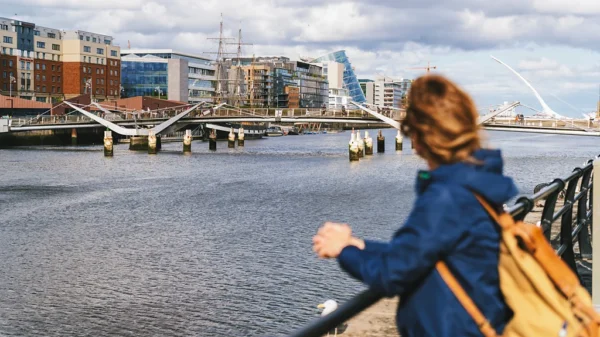


Edinburgh is poised to become the first city in the UK to introduce a special levy on tourists as it struggles to cope with a surge in visitors.
The council is campaigning for the legal powers to introduce a “bed tax” on hotel rooms and short-stay lets such as Airbnb to raise up to £27m a year to improve the city’s infrastructure and allay growing resentment among residents about congested streets and shabby public spaces.
The campaign was backed on Wednesday by Scotland’s other council leaders, who want Scottish ministers to introduce legislation to allow other areas straining under an influx of tourists – such as Skye, Orkney and Argyll – to levy similar local taxes.
Supporters of the levy believe the proposal has a strong chance of being backed at Holyrood and may be in force within two years.
SNP ministers have previously refused to consider it but their objections are thought to be softening, in part because Edinburgh is run by an SNP-led coalition with greater influence in government.
It is being resisted vigorously by hoteliers, who fear Edinburgh’s proposals will set a precedent for other cities, including London, keen to imitate a model widely used by other European cities such as Barcelona, Berlin, Amsterdam and Venice.
The hotel industry insists a new levy is unjustified, since hotels and bed and breakfasts in the UK already pay 20% VAT, a rate far higher than other comparable European countries.
Willie Macleod, Scottish director of the industry group UK Hospitality, said industry studies showed a 1% increase in costs reduced spending by 1.3%. “Edinburgh seems hell bent on taxing our industry [but] there’s a limit to how much we can ask our customers to pay,” he said.
Adam McVey, Edinburgh’s council leader, said their fears were unjustified. The council wanted only a small levy of £1 or £2 per bedroom per night, far lower than the rates charged by other European cities.

“It’s less than a cup of coffee; no one is going to bat an eyelid at the end of their stay when they pay a few pounds extra,” he said.
Edinburgh is experiencing a boom in tourism, bolstered by its year-round series of festivals which begin in spring, peak in August with the fringe and international offerings, and end with its Hogmanay concerts and firework display.
The city’s hotels have the second-highest occupancy rate in the UK, at 82%, and the industry is investing heavily in new ones. Sir Richard Branson hopes to open the UK’s first Virgin hotel behind the city’s central library.
There are three luxury hotel developments on St Andrew’s Square, including an offshoot of the Gleneagles resort. In all, 34 new hotels with nearly 3,000 bedrooms have planning consent and 15 more with more than 2,000 bedrooms await approval.
The industry is dominated by budget chains such as Premier Inn, Ibis and Travelodge. Critics say this makes the city an affordable destination but also increases pressure on space, while their profits end up outside Scotland.
McVey agrees with the Scottish Green party that a steep surge in Airbnb-type lettings by property companies had increased house prices. A study of the Hogmanay festival, during which part of the city centre is closed to non-ticket holders, found only 17% of its tickets were bought by Edinburgh residents.
Unlike Barcelona and Venice, where politicians and residents have staged angry protests at the suffocating number of tourists, often arriving for only a few hours on cruise ships, McVey says Edinburgh wants to bolster its visitor economy.
“To sustain the success that Edinburgh has in its tourism economy, we need to tackle the threats that exist to that. And one of the threats, to put it bluntly, is people in Edinburgh being fed up with the influx of people who come here,” he said.
“I don’t think we’re near the critical mass of putting a ‘no vacancies’ sign up in front of the city, but people do increasingly feel that way.”
Councils say continuing cuts in their funding from central government and a cap on increasing the council tax above 3% makes new sources of local income essential.
The tourism industry is also split. Executives at Edinburgh airport, one of the most powerful businesses in the region, and Marketing Edinburgh, an umbrella group, support the idea in principle, so long as other companies contribute and the funds raised are devoted to supporting tourism.
Since you’re here…
… we have a small favour to ask. More people are reading the Guardian than ever but advertising revenues across the media are falling fast. And unlike many news organisations, we haven’t put up a paywall – we want to keep our journalism as open as we can. So you can see why we need to ask for your help.
The Guardian’s independent, investigative journalism takes a lot of time, money and hard work to produce. Our investigative reporting uncovers unethical behaviour and social injustice, that helps to hold governments, companies and individuals to account. Through this we can, together, create meaningful change in the world. We do it because we believe our perspective matters – because it might well be your perspective, too.
Source: www.theguardian.com


