




























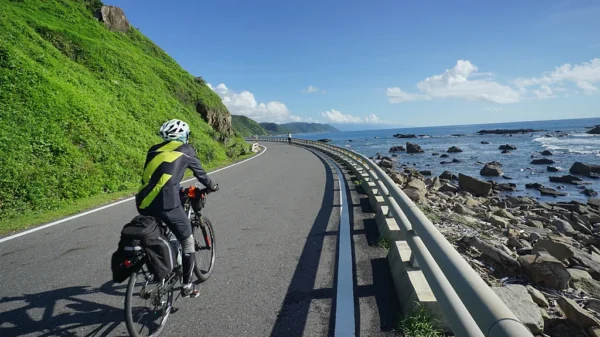
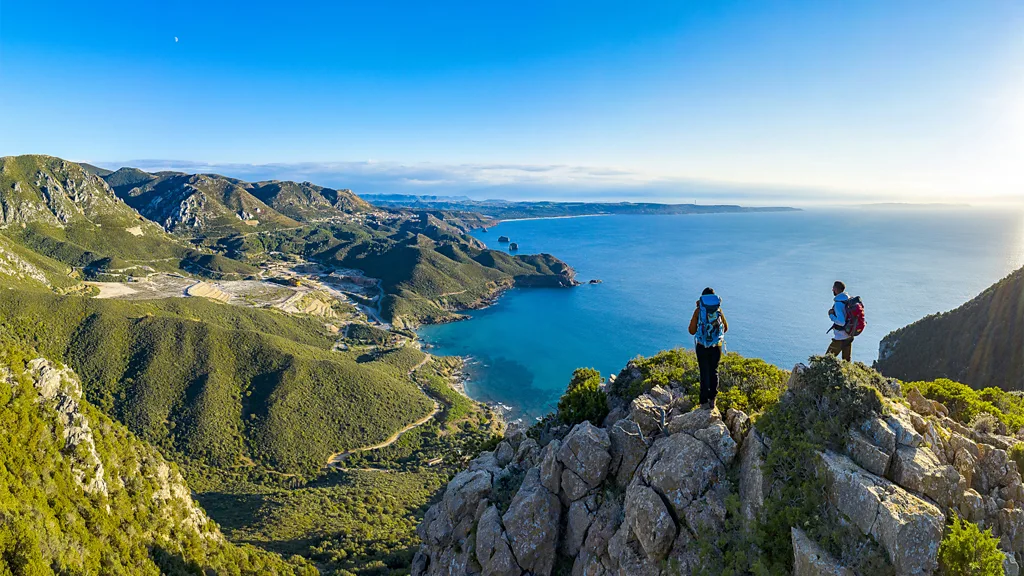
An enticing new programme is seeking to transform a rugged corner of the Italian island into an outdoor lover’s paradise.
Renowned for its pristine beaches and dramatic granite cliffs, the Italian island of Sardinia has long been known as a jet-setters’ paradise. But away from the mega yachts and glitterati of its glamorous Costa Smeralda resort, much of the Mediterranean’s second-largest island remains a rugged, unspoiled wilderness waiting to be explored.
Now, a group of hikers and former miners are hoping to lure adventure-seekers to Sardinia’s seldom-visited south-west coast by offering free lodging along the island’s stunning 500km Santa Barbara Mining Route.
Named for the patron saint of miners, the 30-stage route passes through towering sand dunes, lush forests, craggy outcrops and nearly 150 abandoned mines. It also allows travellers plenty of opportunities to get to know local Sardinians and enjoy the island’s famous gastronomy.
“Before my trip, I didn’t know anything about the history of that part of Sardinia,” said Giorgio Pedulla, a 26-year-old data analyst from Milan who spent five days hiking the trail in March. “On this hike, you really manage to get into the culture and the life of the people who live there.”
Pedulla was taking advantage of the trail’s new Leg’s Go In Cammino initiative, which launched in October 2023 and offers visitors younger than 35 up to three consecutive nights’ accommodation for free. When hikers register, they’re granted vouchers to use in local inns, campsites and bed and breakfasts. After the free stays, they pay the standard rates of €20 a night at posadas (small family-style inns) and €28 a night at private accommodations.
“We wanted to decrease the average age of our visitors, from retired people to people in their 20s and 30s. It’s also very important for us to let people know about the history of this trail,” said 30-year-old Margherita Concu, the association’s secretary and a hiker who has trekked all 500km of the trail. “We want people to learn about this community, a place that even some Sardinians don’t know about.”
The area’s jaw-dropping beauty and budget accommodations have proven a powerful draw. In 2023, 1,199 hikers set off on the trail. So far this year, 1,521 have come, trekking along mule tracks dating to 800 BCE, stone bridges built by the ancient Romans and 19th-Century rail lines. To date, 196 hikers completed the entire trail since it opened in 2017, often taking a month to do so. In addition to bragging rights, finishers receive a trophy made by a local artisan depicting a ceramic tower with three windows – the symbol of Santa Barbara.
Scenery aside, exploring the trail gives hikers the chance to fuel up on Sardinia’s renowned cuisine and hyperlocal ingredients. Travellers can sample bluefin tuna pasta in the village of Carloforte, the island’s renowned sweet onions in San Giovanni Suergiu; spiny artichokes in Masainas, chickpeas in Musei and the famous cherries and oranges of Villacidro. Along the way, visitors absorb the area’s ancient history, with sites reflecting the island’s tangled roots and vulnerability to outside conquering forces.
South-western Sardinia was inhabited as far back as 6000 BCE, with mining and metal trading documented as early as the Bronze Age Nuragic period and lead and silver ore excavations starting in the second millennium BCE. When the Romans took over the island in 138 BCE, they brought advanced mining techniques and founded mining cities where they forced slaves and prisoners to work. After the fall of the Roman Empire, these mines were largely abandoned.
In quintessential Italian fashion, the trail traces a history informed by aristocrats, strikes and protests. In the 12th Century, Pisan Count Ugolino della Gherardesca developed the silver mines in Iglesias, now the starting point of the trail. A century later, when the Aragonese conquered the island, they closed the mines, sending the miners to Catalonia. In the second half of the 19th Century, as Italy was becoming a nation, the mines became newly valuable, with Sardinia supplying almost all of the nascent country’s lead and zinc. Many of the mines remained productive through both world wars, but started to decline in the 1960s and ceased operating in the 1990s.
Seeking to honour the heritage of the mines and miners, activists initiated a plan to create the Historical and Environmental Geomining Park of Sardinia and, in 2001, Italy’s Minister of the Environment signed a law recognising the park, allocating government funding and creating 500 jobs for the former miners and those who serviced the facilities. Some of these people now give tours sharing their own stories with hikers throughout the 3,770 sq km park in Sardinia’s south-west Sulcis Iglesiente region (where the Santa Barbara Mining Route is located).
Even for Italians who have been to Sardinia before, the trail is a revelation.
“I’d seen the touristic part, with crowded beaches, but had never seen this more real part of Sardinia,” said Pedulla, who discovered the free lodging promotion while scrolling on Instagram. He invited two Amsterdam-based friends, Carlo Fuselli and Cecile Van Der Stappen, all of whom relished the connections they made with locals.
Source: BBC


