

































Only 9% of crimes end with suspects being charged or summonsed in England and Wales, Home Office figures suggest.
In the 12 months to March, 443,000 crimes resulted in a charge or summons out of 4.6 million offences – the lowest detection rate since 2015.
Data also shows police closed nearly half (48%) of all cases because no suspect could be identified.
It comes as new figures show the number of homicides has increased for the fourth year running.
The Home Office statistics on crime outcomes is published at the same time as quarterly crime figures and the Crime Survey for England and Wales, which is based on people’s experiences of crime.
The changing picture of how successfully police are catching criminals comes against a backdrop of rising crime.
Overall, crimes recorded by police went up 11% in the year to March, figures published by the Office for National Statistics suggested.
The Home Office said that along with a growing caseload, there was evidence to suggest that more recorded crimes were in the most challenging offence types to investigate.
It gives the example of sexual offences – up 24% on last year – giving officers a bigger workload and becoming more complex.

Rape cases take an average of 129 days to solve compared with, for example, two days for theft or criminal damage.
Other notable findings from the Home Office include:
- In sexual offence cases, only 5% resulted in someone being charged or summonsed
- That figure falls to 3% for rape cases. In about a third (34%) of rape cases, the victim did not want to take the case to its conclusion
- In all, one in five cases went unresolved because the victim did not support action, usually meaning they did not want to go through the courts
- Three quarters of theft cases were closed with no suspect identified
- This was also the case in more than half (57%) of robberies, including muggings
Analysis: A vicious circle of crime?
By BBC home affairs correspondent Danny Shaw
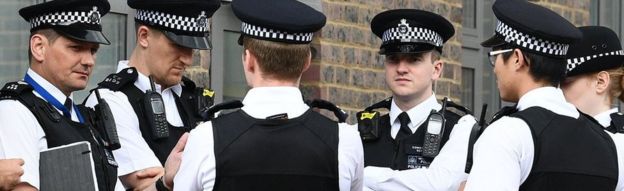
These figures paint a gloomy picture. Not only are police recording more crimes – but they’re solving fewer of them.
That’s partly because proportionately more of the offences they have to deal with are complex and difficult to investigate, such as rape.
But it may also be a reflection of the decline in police officer numbers since 2010, down by a further 738 according to the latest workforce data, and the national shortage of detectives, as the Inspectorate of Constabulary has highlighted.
The consequences are serious: victims not getting the justice they deserve, public confidence in the criminal justice system damaged and more offenders avoiding detection – and free to commit further crimes.
It threatens to become a vicious circle of crime.
Meanwhile, the latest figures for recorded offences showed homicides in England and Wales were up 12% in the 12 months to the end of March, from 627 to 701.
Homicide covers cases of murder, manslaughter, corporate manslaughter and infanticide, but these figures exclude terror attacks.
The Office for National Statistics (ONS) said homicide remained rare and tended to take place in London and other cities.
The start of 2018 was characterised by what appeared to be regular killings on the streets of London.
Between January and March, the BBC recorded 46 killings in the city – some from gunshot wounds but most from stabbings. Among those killed were a handful of teenagers.
Source: www.bbc.com


