
















By Manami Miura, award-winning sake sommelier at the Ginza Kimijimaya liquor store, @sakephygram
My city in a nutshell
Tokyo is a city of gigantic proportions: 47 neighbourhoods slotting together like parts of an elaborate puzzle, home to more than 4,000 shrines and temples, 6,000 parks, and 300,000 restaurants (10 times as many as New York). Quiet shrines stand near neon-lit electronics shops, and serene parks edge up against alleyways lined with late-night ramen bars. But it wasn’t always this way: in the 1600s, when Tokyo was still called Edo, it was nothing but a tiny fishing village, until the shogun Tokugawa Ieyasu decided to build a castle here. In 1868, it was made the capital, and it is now among the largest cities in the world.
If you do one thing
Ask 100 people what to do in Tokyo and you’ll probably get 100 different answers. I tell people to walk around Ginza. This central neighbourhood is one of Japan’s wealthiest postcodes, where glossy department stores and high-end brands are housed in many of Tokyo’s prettiest buildings, blending the best of Japanese fashion, design and cuisine – it’s also the heart of Tokyo’s sushi culture. Some of the greatest sushi restaurants on Earth are here, including the immortalised shop of Jiro Ono, star of the Jiro Dreams of Sushi documentary.
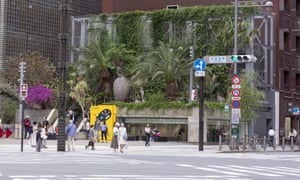
While in Ginza, also visit Sony Park – a quirky urban space that often hosts live music – as well as the tiny shrine of Toyoiwa Inari, hidden down a very narrow alley. Also stop for a drink at Nissan Crossing, a cafe where you can have your face etched on top of your latte in macchi-art for ¥400 (£3).
My favourite place to eat
A small restaurant in Tokyo’s Ebisu neighbourhood called GEM by Moto. Diners squeeze in on stools around the hardwood counter as they watch owner and sake sommelier Marie Chiba at work. This year, Marie was awarded the Sake Samurai award – one of the most prestigious achievements in the sake industry – for her unique pairings at GEM, selecting sake for each customer based on their food choices from the regularly changing blackboard menu. Her most famous pairing, which you can ask for, is that of milky-white doburoku (unfiltered homebrew sake) with a blue cheese and ham cutlet. On the restaurant’s white walls, you’ll find scrawled messages from Marie’s many sake brewers, who travel from across the country to become customers themselves.
• Small plates from £3.80, 1 Chome-30-9 Ebisu, Shibuya City, on Facebook
Where to stay
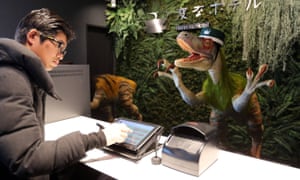
A trip to Tokyo wouldn’t be complete without dipping a toe into the city’s slightly stranger side. A stay at a Henn-na Hotel (meaning strange/weird hotel) will certainly allow you to do that. This chain, of which there are several branches across Tokyo, is almost solely run by robots: some in the shape of people, some in the shape of dinosaurs. You are generally checked in by a robot at reception, with a porter robot to carry your things to your room (plus robotic fish in the fish tank). The latest Henn-na Hotel, which opened on 1 September in Asakusa, even has holographic robot staff who flicker in front of you on the walls. You probably wouldn’t want to spend more than a night or two there, but the rooms are affordable and are in great locations, from Ginza to Maihama (by Tokyo Disneyland). If the robot novelty doesn’t appeal, I also recommend Remm in Hibiya (doubles from £85), a modern hotel that provides a quiet, comfortable night’s sleep in the heart of the city, with rooms featuring rain showers and massage chairs.
• h-n-h.jp/en,doubles from £55
What the guidebooks overlook
Tokyo is often said to be the foodie capital of the world, with more Michelin stars than any other city on Earth. But less appreciation is given to the city’s creative brewers, of which there are hundreds. My favourites include Brewin’ Bar in Ginza, where you can try home-brewed craft beers (£6); an amazing urban winery called Fujimaru in Kiyosumi-Shirakawa, with both a restaurant and a wine tasting room; and Wakaze, a brewery that does pop-ups around the city, serving deliciously sour oak barrel-aged sake.
Moving on
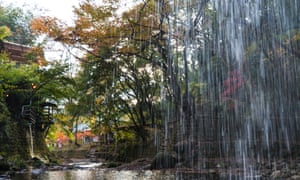
Head north to nearby Ibaraki prefecture, where nature is in abundance. This is where you’ll find the beautiful Tsukimachi waterfall, one of Japan’s 88 ancient power spots. Here people practise a Buddhist ritual called Takigyo, known as “waterfall meditation”, a cleansing of the mind and soul achieved by standing under the powerful – and very cold – water for anything from several minutes to several hours (something only committed monks achieve). You can rent a traditional shiro shozoku karate-style outfit and try it for yourself (I did it in August), warming up after at Momiji-en, a soba (buckwheat noodle) restaurant that overlooks the maple tree valley. About 12 miles away, you’ll find Japan’s highest bungee jump, which sees visitors throw themselves off a 100-metre-high suspension bridge above colourful Ryujin Gorge. To get to Ibaraki, take the 90-minute Limited Express train from Tokyo to Mito, then the 90-minute local Suigun Line train to Shimonomiya station. Tsukimachi waterfall is a 1½-mile walk from there. Alternatively, hire a car in Mito for easy access to Ibaraki’s more rural reaches.
Inspiration
There are plenty of great Instagram accounts to follow for tips on Tokyo, including photographer @tokyo_one, who shares beautiful imagery, and @bunnytokyo who shares interesting stories. If you can get your hands on a copy, I also recommend the book series Tokyo Artrip. The books, written in Japanese on one side and English on the other, highlight great places to experience everything in Tokyo from sake and green tea to architecture and antiques.
Fixtures

- Wales v Australia 29 September
- England v Argentina 5 October
- Quarter-final 2 19 October
- Quarter-final 4 20 October
- Third place play-off 1 November
www.theguardian.com


