


























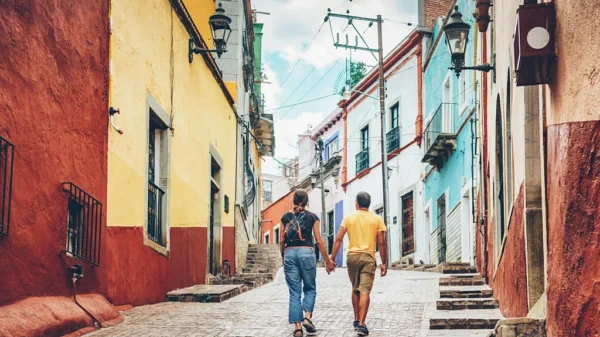
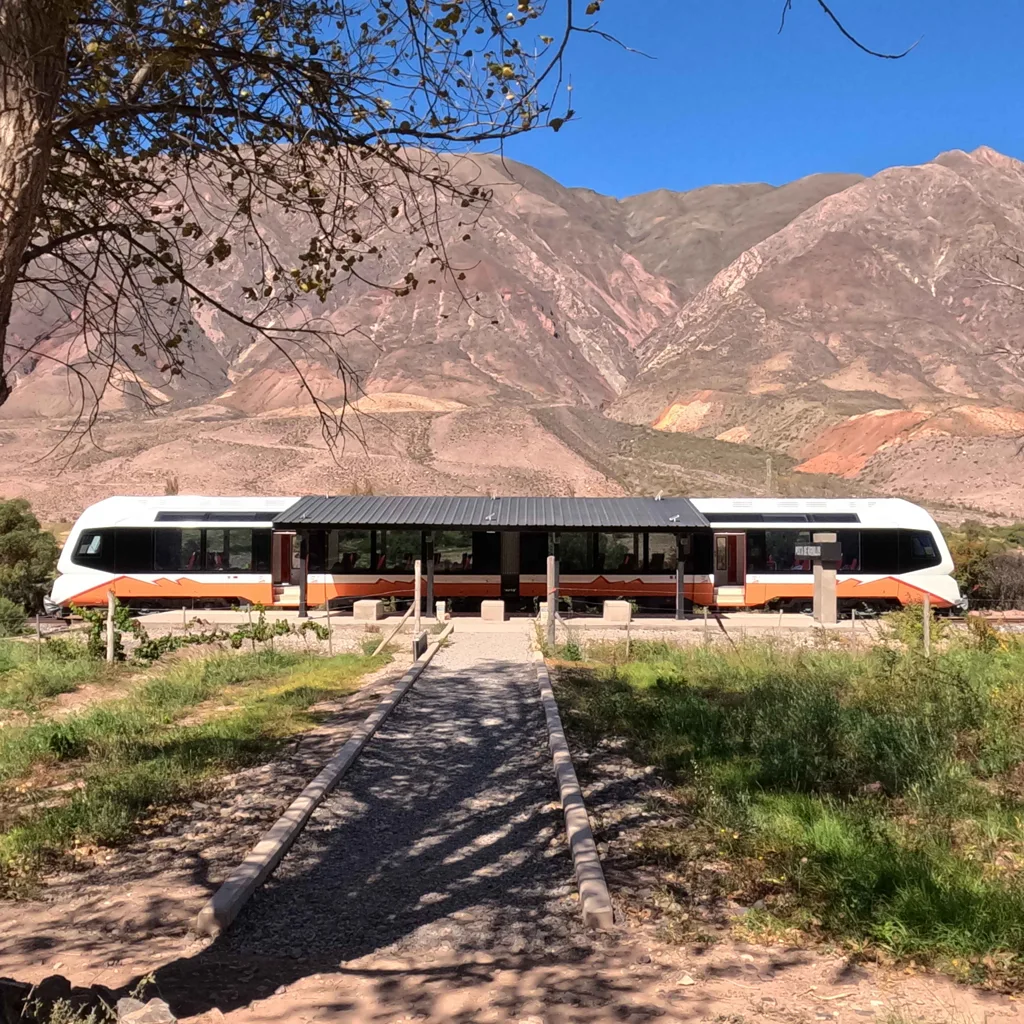
The zero-emissions luxury train is taking travellers through rainbow mountains, Indigenous villages and a 10,000-year-old cultural corridor.
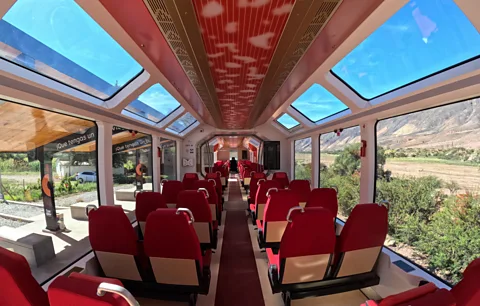
The train – a sleek, glass-sided, two-carriage capsule – looked almost too futuristic for the landscape it was about to enter. As it eased out of the historic village of Volcán, panpipe music drifted through the carriage and the Quebrada de Humahuaca opened around us, a narrow, high-altitude valley of thorn scrub, red earth and folded peaks that has carried people, goods and beliefs for more than 10,000 years.
This is one of South America’s oldest cultural corridors, a route first crossed by hunter-gatherers around 9000BC and later travelled by Indigenous traders, Inca messengers, Spanish colonists, muleteers and railway workers. Today, another chapter has been added to that long history: Latin America’s first solar-powered train.
Launched in June 2024, the Quebrada Solar Train revives part of a 19th-Century railway through Indigenous villages in Argentina’s Jujuy province. The 42km (21.6 mile) route links historic villages where pre-Inca, Inca and living Andean traditions still overlap. Along the way, it follows part of the Qhapaq Ñan, the vast Inca road network that once connected communities across the Andes, from present-day Colombia to Argentina and Chile.
Ride the Quebrada Solar Train
The train runs seven days a week, connecting five historic villages – Volcán, Tumbaya, Purmacara, Maimará and Tilcara over 42km (26 miles) – with an additional stop at Hornillos, a former staging post turned museum. Choose from the shorter 180-degree experience (from Purmacar; 2.5 hours) or the 360-degree experience from Volcán, which takes around 10 hours (90 minutes on the train with extended stops at each station to explore on foot).
But the train is not just a sustainable way to sightsee through Andean mountains and adobe villages. Officials hope the zero-emissions railway will bring tourism income to communities and archaeological sites along the valley, helping younger residents remain on ancestral land while honouring the values that have long shaped life here: respect for Pachamama (Mother Earth), reciprocity and balance.
And for visitors, it offers the chance to travel through a landscape where ancient traditions remain part of everyday life.
Slow travel through a living valley
Travelling at modest 33km/h (20.5mph), the train gives me time to study the valley as we leave Volcán for our first stop at Tumbaya. Thanks to around 300 sunny days a year, the carriages glide almost silently through the landscape. Around me are mostly Argentine tourists and retired couples rather than international visitors, all settling in for a leisurely day of culture and history. Long stretches of greenery slip past the window, with deep crevices cutting into the slopes and cactus-studded hills rising on each side. The ride is so gentle that when we arrive, I barely feel the train come to a halt.
From the station, our onboard guide, Nestor Mariotti, leads us through Tumbaya’s cobblestone streets, past two labourers patching the wall of a small home. “I bet you don’t see this type of brick at home,” Mariotti says to me, pointing out the sun-dried clay bricks used in many of the village buildings. “It’s traditional here, a technique taught from father to son for over 1,000 years.”

We pause again at the bold yellow Nuestra Señora de los Dolores Church. Today the village is almost silent, but Mariotti tells me that only a few weeks earlier, before Holy Week, hundreds of thousands of devotees had passed through for the Punta Corral pilgrimage into the mountains. “This is one of the most important places for us in the Quebrada de Humahuaca,” he says. “It might be extremely quiet here today, but a few weeks ago it was overflowing with people.”
Onwards through the valley, the land becomes drier and more barren streaks of red begin to appear in the pointed peaks. At Purmacara Station, we transfer into minivans and snake 3.5km (2 miles) along a side road towards the village. Other than the cloudless sky, everything has a rosy hue. Behind the village’s low adobe buildings, the famous Cerro de los Siete Colores (the Hill of Seven Colours) rises in bands of pink, red, purple and ochre.
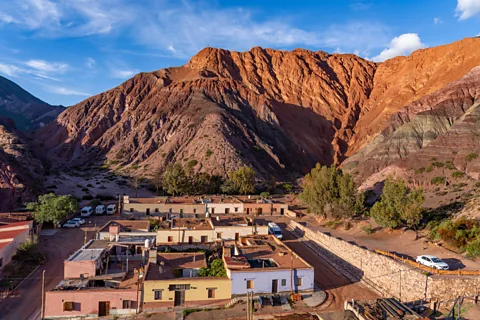
In the main square, artisan stalls spill over with ponchos, blankets and belts made from hand-spun llama wool, alongside clay pots, cardón cactus lamps and baskets of coca leaves. A few streets away is the entrance to the Paseo de los Colorados, a 30-minute trail looping through the Mars-like mountains.
“If you see cans or bottles in a pile, please leave them there,” says Maria Aguero, the ticket officer at the gate. “These, [along with] coca leaves and cigarettes, are spiritual offerings.” The items are left on small stone cairns, known as apachetas, as a way of expressing gratitude to Pachamama and asking for safe onward travel. In Juyjuy, similar rituals continue throughout the year, and some smaller offerings remain part of daily life.
Ancient routes, everyday traditions
Back on the train, we continue to Hornillos, where branches of red, yellow and purple flowers line the path from the station. Passing an old two-wheeled farming cart, we soon reach the Postal Museum of Los Hornillos, where our museum guide, Alberto, is waiting for us.
“During the 18th Century, passing merchants and couriers came here to catch up on sleep while travelling between Buenos Aires and Upper Peru, which is now known as Bolivia,” he says. “But as you’ll see inside, the human history of the Quebrada de Humahuaca dates back [more than] 10,000 years before this place was built.”
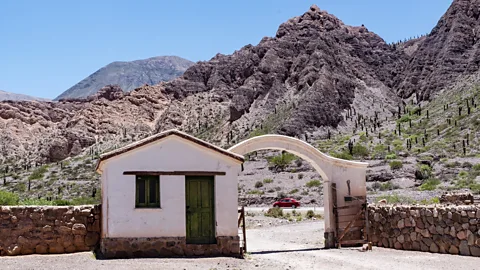
Inside the large single-storey estate, the valley’s long human history comes to life. I learn that it was first used by nomadic hunter-gatherer communities around 9000BC, then became a trade route for the Indigenous Omaguaca people, who moved salt and clay pottery through the valley. Later, it was claimed and paved by the Inca Empire before becoming the Royal Silver Road during the Spanish conquest in the 16th Century.
As we glide towards Maimará back on the train, the landscape softens into agriculture, with vineyards, orchards and 1,500-year-old walled terraces where quinoa has been grown for more than a millennium.
Outside Maimará station, a market is filled with the sweet, earthy smell of black mint, Andean saffron and medicinal muña-muña (a native herb). Crates of red, purple, white and brown Andean potatoes sit beside ripe peaches, figs and grapes. Feeling peckish, I head to the plaza and order a quinoa and goat cheese empanada from La Casa de las Empanadas.
Humita en chala and tamales are also on the menu, both steamed corn-based dishes that date back thousands of years. When I ask Miriam, the owner, about her business, she tells me she is “very happy that the train brings more customers every day, so I can keep cooking and share the food of our ancestors with people who aren’t from here”.
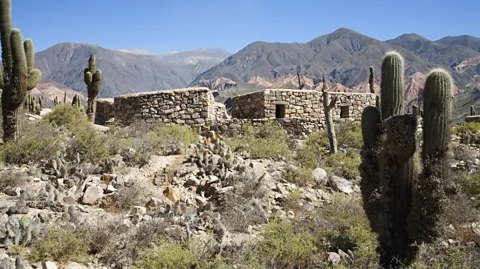
At the train’s final stop, Tilcara, it’s a 30-minute walk up to the Pucará de Tilcara archaeological site. This pre-Inca stone fortress was built by the Omaguaca more than 1,100 years ago and it is thought that up to 2,000 people once lived here. From its hilltop walls, it’s easy to understand why communities settled here: the valley stretches in every direction, both defensible and fertile. Below, artisan markets continue the traditions of weaving and pottery that have been practised here for centuries.
Before we return to Volcán, Mariotti shares a final thought. “Years ago, there was no work here except during vacations; today, we have steady employment,” he says. “By coming here, you are giving young people and future generations the opportunity to stay in our towns, to study, to professionalise ourselves, and most importantly, to work here on our land without the need to migrate to the big city.
So, while you spend a few days of rest and relaxation here in my province, it completely changes our lives.”
Source: BBC


