
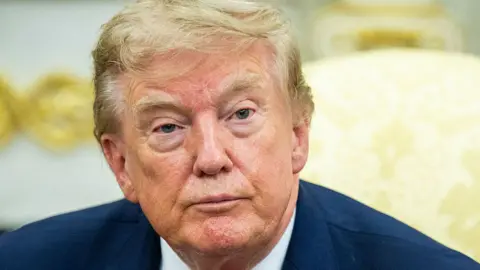












US President Donald Trump has tweeted that Russia should “get ready” for missiles to be fired into Syria, in response to an alleged chemical attack near Damascus at the weekend.
Senior Russian figures had threatened to meet any US strikes with a response.
Mr Trump had promised a “forceful” reply to the suspected attack.
President Bashar al-Assad’s government, which is backed militarily by Russia, denies being behind the chemical attack on the rebel-held town of Douma.
In his tweet, Mr Trump called Mr Assad a “gas killing animal”.
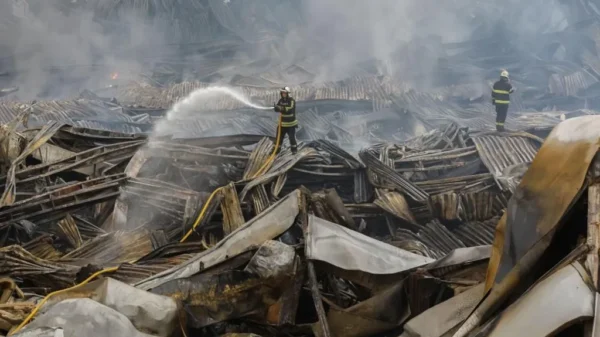
On Saturday, Syrian opposition activists, rescue workers and medics said government aircraft dropped bombs filled with toxic chemicals on Douma.
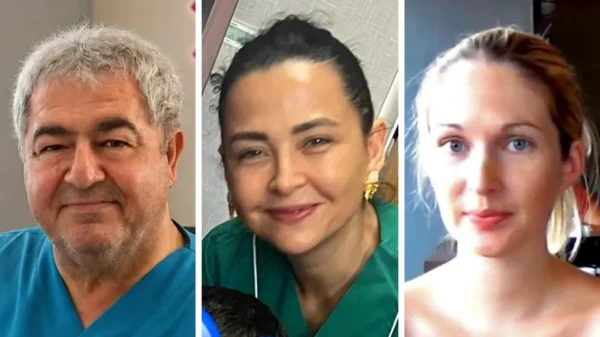
The Syrian-American Medical Society (SAMS), which supports hospitals in rebel-held areas, and rescue workers the Syria Civil Defence said more than 500 people were treated for symptoms “indicative of exposure to a chemical agent”.
On Wednesday, the UN’s World Health Organization demanded access to the area to verify reports from its partners, who include Sams, that 70 people had died – including 43 who showed “symptoms consistent with exposure to highly toxic chemicals”.
- Syria ‘chemical attack’: What we know
- WHO demands ‘chemical attack site’ access
- Viewpoint: Chemical weapons ‘threat to West’
The US, UK and France have agreed to work together and are believed to be preparing for a military strike in response.
What is Russia’s position?

The Russian government has described the reports of a chemical attack as a “provocation” designed to justify Western intervention against its ally.
Several senior Russian figures have warned of a Russian response to a US attack, with Alexander Zasypkin, Moscow’s ambassador to Lebanon, repeating on Wednesday a warning by the head of the military that missiles would be shot down and their launch sites targeted if they threatened the lives of Russian personnel.
Mr Trump’s tweet referred to this warning.
 Donald J. Trump
✔@realDonaldTrump
Russia vows to shoot down any and all missiles fired at Syria. Get ready Russia, because they will be coming, nice and new and “smart!” You shouldn’t be partners with a Gas Killing Animal who kills his people and enjoys it!
End of Twitter post by @realDonaldTrump
Also on Wednesday, Russian foreign ministry spokeswoman Maria Zakharova asked whether the aim of Western strikes might be “to quickly remove the traces of the provocation… [so] international inspectors will have nothing to look for in terms of evidence”.
A team from the Organisation for the Prohibition of Chemical Weapons (OPCW) is due to deploy to Syria “shortly” to determine whether banned weapons were used in Douma.
What happens next?
On Tuesday, US President Donald Trump cancelled his first official trip to Latin America so he could focus on Syria.
That decision suggests the US response may involve a larger military operation than a limited strike, says the BBC’s Barbara Plett Usher in Washington.
French President Emmanuel Macron said any strikes would “not target allies of the [Syrian] regime or attack anyone, but rather attack the regime’s chemical capabilities”.
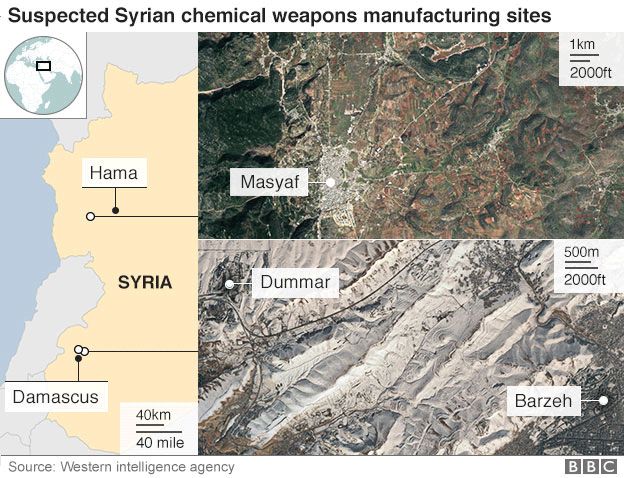
But The Times newspaper reports that the UK’s Prime Minister Theresa May has urged Mr Trump to provide more evidence of the suspected chemical attack.
A US Navy guided-missile destroyer, the USS Donald Cook, is in the Mediterranean Sea, and the European air traffic control agency, Eurocontrol, has warned airlines to take “due consideration” while in the eastern Mediterranean over the next few days, because of the possible launch of missiles into Syria.
Moscow’s UN ambassador, Vasily Nebenzia, warned Washington that it would “bear responsibility” for any “illegal military adventure” it carried out.
What is the UN doing?
On Tuesday the UN Security Council failed to approve moves to set up an inquiry into the alleged attack on Douma.
As permanent members of the council, Russia and the US vetoed each other’s proposals to set up independent investigations.
The US-drafted resolution would have allowed investigators to apportion blame for the suspected attack, while Russia’s version would have left that to the Security Council.
The OPCW’s fact-finding mission will not seek to establish who was responsible for the attack.
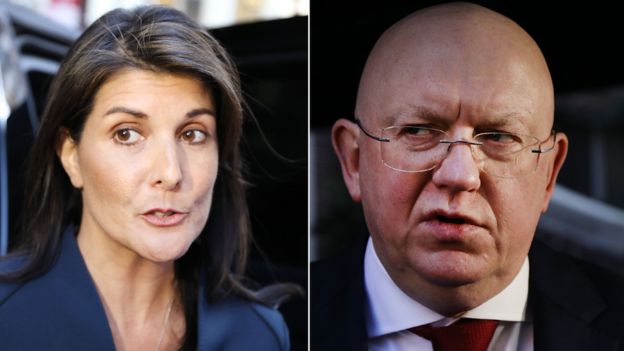 Image copyrightGETTY IMAGES
The UN session was the latest in a series of showdowns between Russia and the US and saw harsh words exchanged between the countries.
Ambassador Nebenzia accused the US of “planting” a resolution” as a justification for military action.
US envoy Nikki Haley responded by saying: “Russia has trashed the credibility of the council. Whenever we propose anything meaningful on Syria, Russia vetoes it.”
Source:bbc.com


